
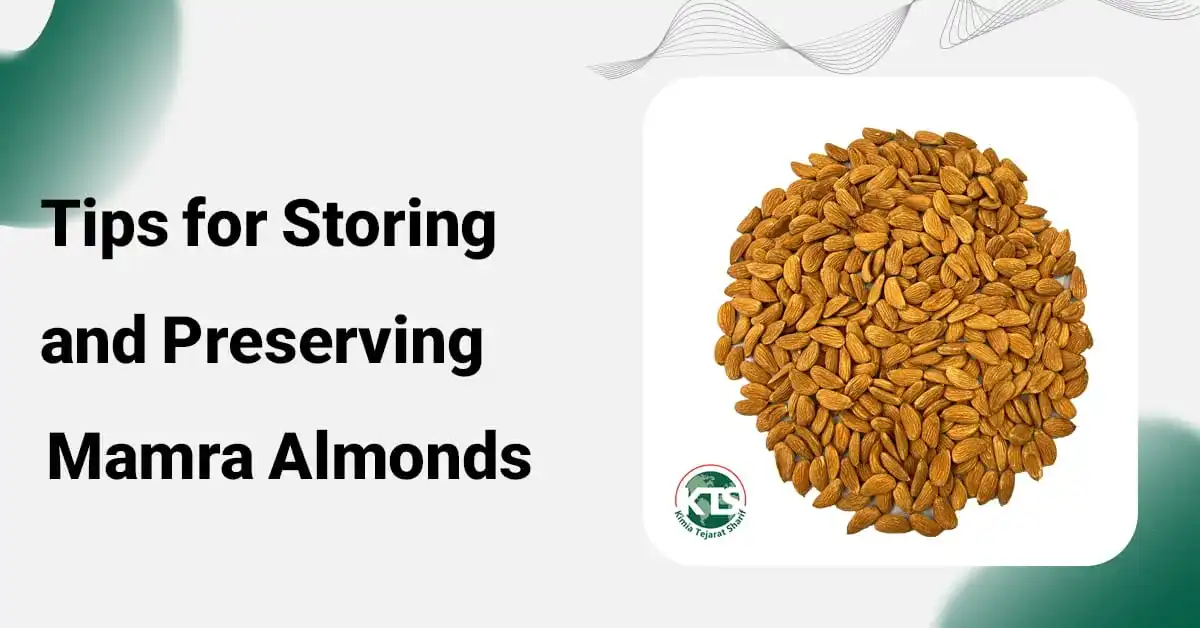
The short answer on how to store Mamra almonds is simple: keep them in an airtight glass or metal container, in a cool, dark, dry spot away from heat, light and strong smells. A quiet corner of the pantry works for the next few weeks. If you plan to keep them for several months, move them to the refrigerator or freezer, where the cold slows down the oxidation that makes almond oil turn rancid.
Good Mamra almond storage matters more than many people expect. Mamra kernels are prized for their rich flavour and generous natural oil, and the same oil that makes them taste so good also makes them sensitive to warmth, air and humidity. The Almond Board of California notes that almonds kept below 10°C (50°F) and below 65% relative humidity can stay in good condition for more than two years. At normal room temperature, quality fades much sooner, so the way you store them decides how they taste when you finally eat them.
What Affects Mamra Almonds Freshness?
Almonds do not spoil overnight, but they do age, and four factors speed that process up:
- Heat. Temperatures above roughly 21°C (70°F) accelerate the breakdown of the natural oils.
- Oxygen. Air reaching the kernels causes oxidation, which is the root of stale and rancid flavours.
- Light. Direct sunlight speeds up degradation, so a bright windowsill is a poor storage spot.
- Moisture. Humidity above about 60% encourages mold and softens the kernels. Industry guidelines aim for kernel moisture below 6%.
These factors work together, so protecting Mamra almonds freshness means controlling all four at once rather than fixing just one. A sealed jar in a hot kitchen fails on heat. A cool room with an open bag fails on air and moisture.
How to Store Mamra Almonds at Home
1. Start with whole, dry kernels. Whole almonds keep longer than sliced, chopped or blanched ones, which lose their protective skin and spoil faster. Mamra almonds are usually sold whole with the skin on, so leave them that way until you need them. Mamra almonds are usually sold whole with the skin on, so leave them that way until you need them. If you are still weighing Mamra against regular almonds, our article on whether Mamra badam is better than normal almonds covers the differences.
2. Move them out of the shipping bag. Once the pack is open, transfer the almonds to an airtight container right away, because many original bags do not reseal properly.
3. Pick the right spot. Choose a cool, dark place away from the stove, oven, dishwasher and sunny windows. A jar left beside the cooker goes through a heating and cooling cycle every day, and within weeks that does more damage than months on a cool shelf.
4. Label the date. Write the opening date on the lid so you can use the oldest stock first.
5. Portion it out. Keep a small amount for the week in the pantry and store the rest in the refrigerator or freezer.
Choosing the Right Container for Mamra Almond Storage
Glass jars with tight fitting lids and metal tins are the best everyday choice for Mamra almond storage. They block air and pests, do not absorb odours and are easy to clean. Dark or opaque containers add protection from light. Resealable bags also work if you press out as much air as possible, and vacuum sealed bags are better still for long term storage because removing the air reduces oxidation and freezer burn.
Avoid thin plastic tubs, which let smells in, and never leave almonds in an open bowl. In humid climates, a food grade silica gel packet placed inside the container helps absorb stray moisture.
Best Almond Storage Method
There is no single answer to almond storage, because the right method depends on how quickly you will use the almonds and the climate you live in. The table below is a guide. The timings are approximate and assume airtight packaging.
| Method | Typical temperature | Best for | Approximate shelf life |
|---|---|---|---|
| Cool, dark pantry | Below 21°C (70°F), cooler is better | Almonds you will finish within weeks or a few months | Commonly 6 to 12 months, less in a warm kitchen |
| Refrigerator | 2 to 4°C (35 to 40°F) | Longer storage, hot or humid climates | Often a year or longer |
| Freezer | -18°C (0°F) | Longest storage, stock you rarely open | 18 to 24 months or more |
Sealed, unopened packs of raw almonds kept in a cool, dark place can last up to two years according to industry guidance. Once a pack is opened, the clock runs faster.
How to Freeze Mamra Almonds Properly
Divide the almonds into portions and place each in a freezer bag or airtight container with the air pressed out. Moisture is the enemy here, since it causes freezer burn and mold. When you need some, let the sealed container reach room temperature before opening it, so condensation does not form on the cold kernels.
How to Keep Mamra Almonds Fresh After Opening the Pack
Opening the pack is the moment freshness starts to slip, because air and humidity get in. Here is how to keep Mamra almonds fresh once the seal is broken: press out the excess air and reseal the bag, or move the almonds into a jar straight away. Use a dry scoop or clean dry hands every time, because one damp handful can introduce moisture. Keep the container away from strong smelling foods such as onions, garlic and spices, since nuts absorb odours easily.
If you only remember one thing about how to keep Mamra almonds fresh, make it this: take out only what you will eat this week and return the container to its cool spot right away.
Storing Mamra Almonds in Bulk
For importers, wholesalers and food manufacturers, storing Mamra almonds in bulk is less about jars and more about controlling the whole warehouse environment. The principles are the same as at home, but the stakes are higher because one humid week can affect an entire pallet.
Consider a distributor in a humid coastal city who stacks cartons beside a loading door. Every time the door opens, warm damp air rolls in, and the cartons nearest the door take on the most heat and moisture. The fix is not complicated, but it has to be planned:
- Climate. Aim for below 10°C and below 65% relative humidity where cold storage is available. Where it is not, choose the coolest, driest and most stable part of the building.
- Moisture content. Recommended conditions aim to keep kernel moisture under 6%. Test incoming lots with a moisture meter and keep a record of the readings.
- Temperature swings. Large changes in temperature and humidity are what make long term storage in ambient conditions difficult, because they push moisture into the product and cause condensation inside packaging. Keep stock away from roofs, loading doors and sun facing walls.
- Pallet layout. Keep cartons off the floor and away from walls with room for airflow, and separate them from strong smelling goods and chemicals.
- Pest control. Schedule regular inspections and keep the storage area clean.
- Stock rotation. Use first in, first out, with batch numbers and dates on every carton.
- Packaging. Keep inner liners sealed until use and reseal partly used cartons.
Planning ahead makes storing Mamra almonds in bulk far more predictable. Before a shipment leaves, ask your supplier about packaging type, batch dating and recommended holding conditions, and inspect a sample from every delivery. The same rules apply whichever grade you buy, and professional almond storage always comes back to steady, cool and dry conditions.
How to Tell if Almonds Have Lost Their Freshness
Check your stock regularly, especially if it has been stored for months. Trust your nose first, since a rancid smell is usually the earliest warning sign.
- Smell: sharp, sour or paint like rather than mild and nutty.
- Taste: bitter, flat or soapy.
- Texture: soft, chewy, oily or sticky instead of crisp.
- Appearance: mold spots, dark discolouration, webbing or tiny holes that suggest insects.
If a batch fails any of these checks, its Mamra almonds freshness is compromised, and it should not be sold or eaten. When in doubt, throw it out.
FAQ
1. How to preserve almonds for a long time?
Keep them whole in an airtight container in a cool, dark, dry place. For the longest life, use the refrigerator or freezer, where they can last 18 to 24 months or more.
2. How long can sealed almonds last?
Sealed packs of raw almonds can last up to two years in a cool, dark pantry. Once opened, use them within several months or refrigerate them.
3. Is it better to store nuts in glass or plastic?
Glass is usually better because it blocks air, does not absorb smells and is easy to clean. Airtight food grade plastic or freezer bags also work well.
4. Should we soak Mamra almonds?
It is optional. Soaking softens them and gives a milder taste, but raw Mamra almonds offer the same basic nutrition.
5. How to store almonds after soaking?
Drain and dry them, then keep them in an airtight container in the refrigerator. For longer storage, dry them completely first.
6. Can we eat 2 days old soaked almonds?
It is best to eat them within a day. If refrigerated, check them first and discard any that smell sour, feel slimy or show mold.
7. What nuts have the longest shelf life?
Almonds, cashews, macadamias, pistachios and hazelnuts last longest. Walnuts, pecans and pine nuts go rancid faster.
8. How long do Mamra almonds last?
Under ideal conditions, sealed and stored below 10°C with humidity under 65%, almonds can last more than two years. In a typical home pantry, best quality is usually kept for about 6 to 12 months. Refrigeration or freezing extends that considerably.
9. Do Mamra almonds need to be refrigerated?
Not for short term use. A cool, dark pantry is fine for a few weeks or months. For longer storage, or in hot and humid climates, the refrigerator or freezer is the safer choice.
10. Can you freeze Mamra almonds?
Yes. Freeze them in portions in airtight freezer bags or containers with the air pressed out, and let the sealed container reach room temperature before opening it.
11. What is the best container for almond storage?
An airtight glass jar or metal tin, ideally opaque or kept in the dark, is the best everyday option. For long term storage, vacuum sealed or freezer grade bags work well.
12. How do I know if Mamra almonds have gone rancid?
Look for a sharp or paint like smell, a bitter or soapy taste, a soft or oily texture, and any mold or insect damage. Any one of these is a reason to discard the batch.